Cuir auto et marine
Cuir automobile et cuir marine, choisis selon l'usage réel de votre véhicule. Pleine fleur, corrigé, perforé, nappa.
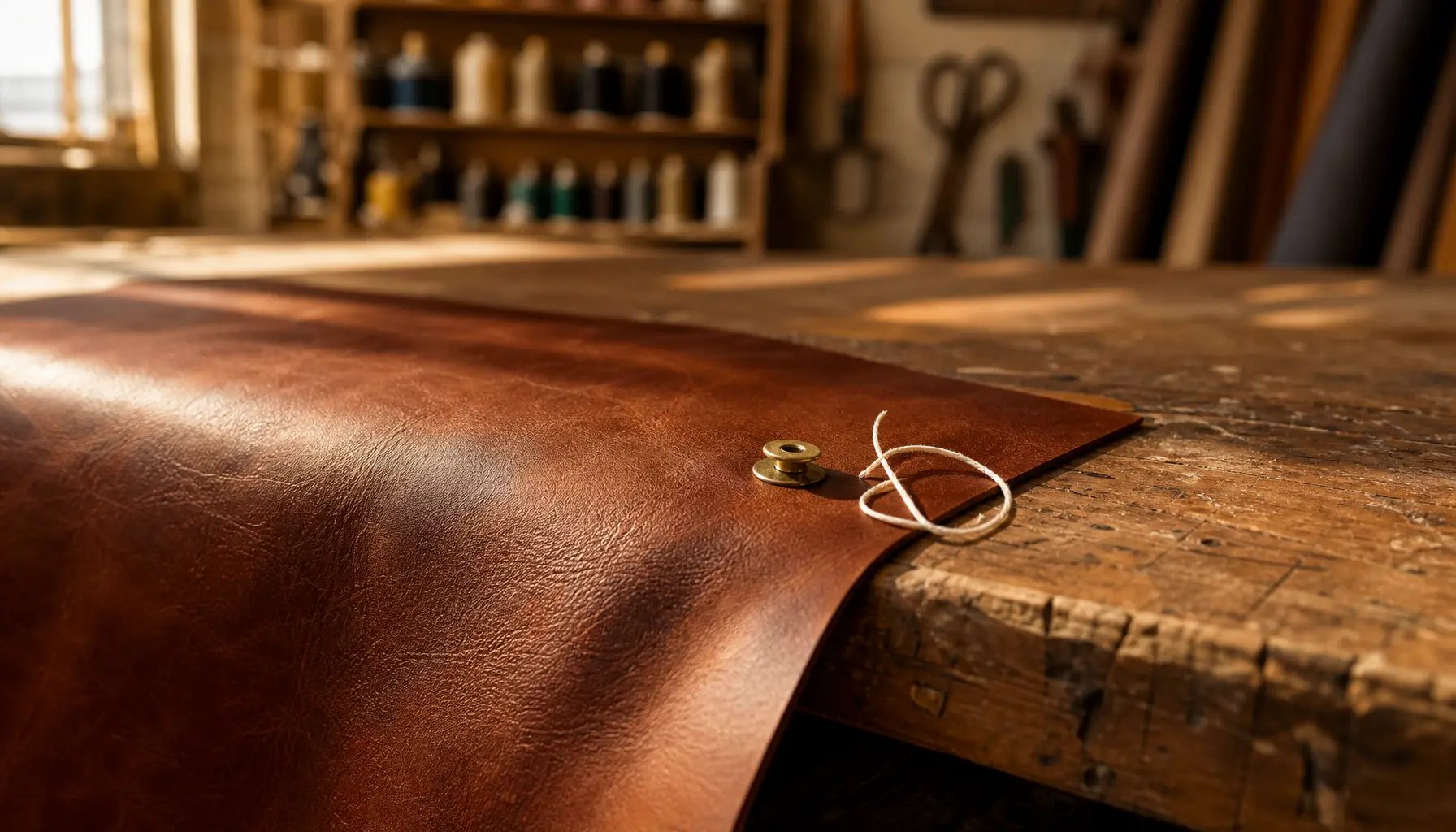
Le cuir de votre auto et de votre bateau
Le cuir se choisit selon l'usage. Le cuir qui va dans votre auto classique ou dans la cabine de votre bateau est fini pour encaisser le soleil direct, les écarts de température entre un stationnement l'été et un garage l'hiver, le frottement d'entrée et de sortie et le fléchissement constant d'un coussin qui se comprime.
Un cuir automobile a un fini protecteur en surface et une toile collée au dos qui l'empêche de s'étirer. Le panneau garde sa forme et les surpiqûres restent droites après des centaines d'entrées et de sorties.
Un cuir de mobilier est fini pour un usage assis en intérieur, à température stable et sans UV. La peau commandée change donc selon que la pièce va dans une Mustang, dans un cockpit de bateau ou sur un accoudoir de cabine.
Les cuirs pour vos sièges et vos panneaux
Plusieurs familles de cuir se retrouvent dans un intérieur, et chacune donne un rendu et un comportement différents sur votre véhicule.
- Pleine fleur. La surface de la peau est gardée intacte, avec son grain naturel. C'est le cuir le plus résistant, et il prend une patine avec les années sur une auto de collection qui roule.
- Cuir corrigé et pigmenté. La surface est poncée et reçoit un grain régulier. Le rendu est uniforme d'un panneau à l'autre sur un intérieur complet.
- Aniline et semi-aniline. Teint dans toute l'épaisseur, presque sans fini en surface. Très doux au toucher, il marque plus facilement à l'usage quotidien.
- Cuir perforé. Perforé en surface pour laisser passer l'air. Utilisé sur les inserts de coussin et de dossier, il rend un siège moins collant par une journée d'été et se marie bien avec un contraste de couleur en dessous.
- Nappa. Cuir souple à grain fin, léger et confortable au toucher. Recherché sur les inserts et les surfaces qu'on touche souvent, comme un volant ou un accoudoir.
- Cuir marine. Fini spécifiquement pour l'humidité, les projections et le soleil d'une saison sur l'eau. C'est le cuir des cabines, des cockpits abrités et des appuis latéraux de barre.
Une peau plus mince épouse mieux un galbe de dossier serré. Une peau plus épaisse tient mieux une arête vive de coussin. L'épaisseur se choisit au patron, pièce par pièce, pour que votre siège garde sa forme aussi longtemps que la mousse en dessous.
Comment le cuir se choisit pour votre bateau ou votre auto classique
Le choix part de votre véhicule et de la façon dont vous l'utilisez. Quatre questions décident.
- Exposition. Habitacle fermé, décapotable sortie l'été, cabine de bateau, cockpit ouvert : le niveau d'UV et d'humidité oriente le fini avant la couleur.
- Usage. Une auto de collection qui sort douze fois par été, une voiture conduite chaque semaine et un banc de pilote qu'on enjambe mouillé demandent chacun un cuir différent.
- Fidèle à l'original ou sur mesure. Reproduire le grain et la teinte d'un intérieur d'époque, ou partir de votre vision avec une couleur et un fini qui n'existaient pas à l'époque.
- Rendu visé. Grain lisse ou grainé, fini matte, satin ou glossy, couleur unie ou contraste entre l'insert et le contour.
Le cuir vient d'un réseau de fournisseurs québécois et se choisit selon votre projet. Sur un intérieur complet, les peaux se commandent d'un même lot pour que la teinte reste constante d'un panneau à l'autre.
Le cuir s'achète à la peau et se mesure en pieds carrés. Une teinte hors stock se commande spécialement, et ce délai s'ajoute au projet. La couleur se fixe donc tôt, dans la soumission.
De la peau à votre siège : coupe, patron, couture
Une peau a une forme irrégulière, des zones qui s'étirent plus que d'autres et ses propres marques. La coupe décide de la tenue de votre siège dans le temps.
Les panneaux qui encaissent le poids et le frottement sont coupés dans le dos de la peau, la zone la plus stable. Les zones souples du ventre vont aux pièces moins sollicitées. Une cicatrice ou une piqûre d'insecte se contourne, ou se place là où elle ne se voit pas. Votre dossier garde ainsi sa forme après deux saisons.
Un projet demande donc plus de pieds carrés que la somme des panneaux, puisqu'une partie de chaque peau ne sert pas à la pièce visée.
Côté couture, fil polyester ou bonded nylon selon la couleur, l'exposition aux UV et la tension. Piping, surpiqûres et double-fil sur les arêtes se cousent au patron d'origine ou selon votre vision. Un motif brodé, logo ou monogramme, se coud sur le panneau à plat avant l'assemblage. Voir broderie sur cuir, tissu et vinyle marin.
Deux peaux du même lot ne sont jamais parfaitement identiques. Annie prévoit du surplus, ajuste au montage et revient sur place après l'installation si un ajustement est à reprendre.
Cuir ou vinyle marin pour vos bancs de bateau
Un banc de pont en plein soleil, mouillé plusieurs fois par sortie, dure plus longtemps en vinyle marin.
Le vinyle marin est imperméable, opaque et fini pour les UV et l'eau. Il encaisse une saison complète d'exposition directe sans changer de main. Voir vinyle marin pour le détail de la matière.
Le cuir marine va à la cabine, au cockpit abrité, aux appuis latéraux de barre et à la banquette de carré, là où la pièce reste à l'abri du plein soleil. Pour les coussins eux-mêmes, voir coussin de bateau sur mesure.
Où le cuir se retrouve dans votre projet
Le cuir sert à presque tout l'intérieur d'auto classique et à une partie du bateau. Les pages suivantes couvrent le travail en détail.
- Sièges d'auto classique. Cover cuir, mousse neuve, fil choisi pour la tension et les UV, au patron de votre voiture. Voir création et réfection de siège cuir.
- Trim intérieur complet. Panneaux de porte, consoles, ciels de toit, panneaux latéraux, coffre recouvert. Voir restauration intérieur auto classique.
- Trim Mustang. Fidèle à l'original ou sur mesure selon votre vision. Voir trim Mustang sur mesure.
- Volant recouvert. Recouvrement cousu à la main sur le volant de votre auto, en cuir lisse ou perforé selon la prise en main recherchée.
- Cabines et cockpits de bateau. Banquettes, appuis latéraux et accoudoirs en cuir marine, là où la pièce est abritée.
Tout modèle d'auto classique passe à l'atelier, fidèle à l'original ou sur mesure selon votre vision.
Pour comparer, voir Sunbrella pour la toile et vinyle marin pour les pièces exposées. Annie vient prendre les mesures sur votre véhicule dans la Rive-Nord, à Laval, à Saint-Laurent, dans les Laurentides et dans Lanaudière. La soumission chiffre la matière et le travail ensemble. 514-298-7735.
Questions fréquentes
- Quelle différence entre un cuir automobile et un cuir de mobilier ?
- Le fini et le dos. Un cuir automobile est fait pour le soleil, la chaleur, le froid et le frottement, avec une toile collée au dos qui l'empêche de s'étirer. Un cuir de mobilier est fait pour un salon, à température stable et sans soleil direct.
- Quels types de cuir sont offerts ?
- Pleine fleur, cuir corrigé et pigmenté, aniline et semi-aniline, cuir perforé, nappa et cuir marine, selon la pièce et l'usage du véhicule. L'épaisseur se choisit au patron : plus mince pour épouser un galbe serré, plus épaisse pour tenir une arête vive de coussin. Le cuir vient d'un réseau de fournisseurs québécois et se choisit selon votre projet.
- Le cuir convient-il pour des bancs de bateau ?
- Oui dans une cabine, un cockpit abrité ou sur des appuis latéraux. Pour un banc de pont en plein soleil et mouillé à chaque sortie, le vinyle marin convient mieux : imperméable, opaque et fini pour les UV.
- Peut-on retrouver le cuir d'origine d'une auto classique ?
- Le grain et la teinte d'un intérieur d'époque s'approchent à partir d'un échantillon de la pièce d'origine, quand il en reste un morceau exploitable. La correspondance exacte se confirme sur un échantillon avant la commande.
- Combien de cuir faut-il pour un intérieur complet ?
- La quantité se calcule en pieds carrés à partir du patron de votre voiture, plus une marge pour les zones de la peau qui ne servent pas à la pièce visée. Le nombre exact sort avec la soumission, une fois les mesures prises sur le véhicule. 514-298-7735.
Demander une soumission pour un projet en cuir
Cuir automobile et cuir marine, coupés au patron de votre véhicule et cousus à la main. Sièges, panneaux de porte, consoles, volants, cabines.
Atelier sur rendez-vous, Rive-Nord de Montréal. 514-298-7735.
Voir aussi
Envoyez une photo de votre projet. Annie vous rappelle.
À lire dans le carnet d'atelier
- Cuir, vinyle, toile : ce que l'hiver québécois fait à vos intérieurs
Votre cuir a besoin d'être nourri avant l'hiver. Votre toile de bateau a besoin exactement du contraire. Trois matières, trois traitements, un seul hiver.
- Reteindre ou refaire l'intérieur d'une voiture ancienne
Restauration intérieur voiture ancienne : la teinture règle la couleur, jamais la fibre. Ce qui décide entre reteindre une housse et la refaire au complet.
- Faire faire une pièce sur mesure ou la remplacer
Faire faire coûte plus cher et prend plus de temps. Le patron est pris sur votre bateau ou sur votre auto. Pour certaines pièces, le catalogue de reproduction suffit.