The comparison between custom work and a ready-made replacement is in another article. This one answers the next question: how a job actually runs.
The first call, and what to have ready
Everything starts with a call or a referral. A marina, a restoration shop, another owner who had his seats done last year.
The call is short and covers three things: what you have, what you want, and when you need it. Annie answers herself. There is no menu and no form to fill in before you talk to someone.
What helps at this stage is short. The make and model of your boat or car. A few photos, first from a distance, then close up on the part that bothers you. And a rough deadline: launch day, a car show, a trip you have planned.
You do not need to know which material you want. That choice comes later, in front of samples.
The number is 514-298-7735 (French only). The call, the quote and the work are in French, so a short written list of the items above gets you through the first conversation. The contact page also takes written requests, and the reply comes in French.
The visit: the pattern comes off your boat
The visit happens where your boat or car is. A marina slip, a garage, a driveway, a trailer. It covers the Rive-Nord, Laval, Saint-Laurent, the Laurentians and Lanaudière.
The visit does three things at once.
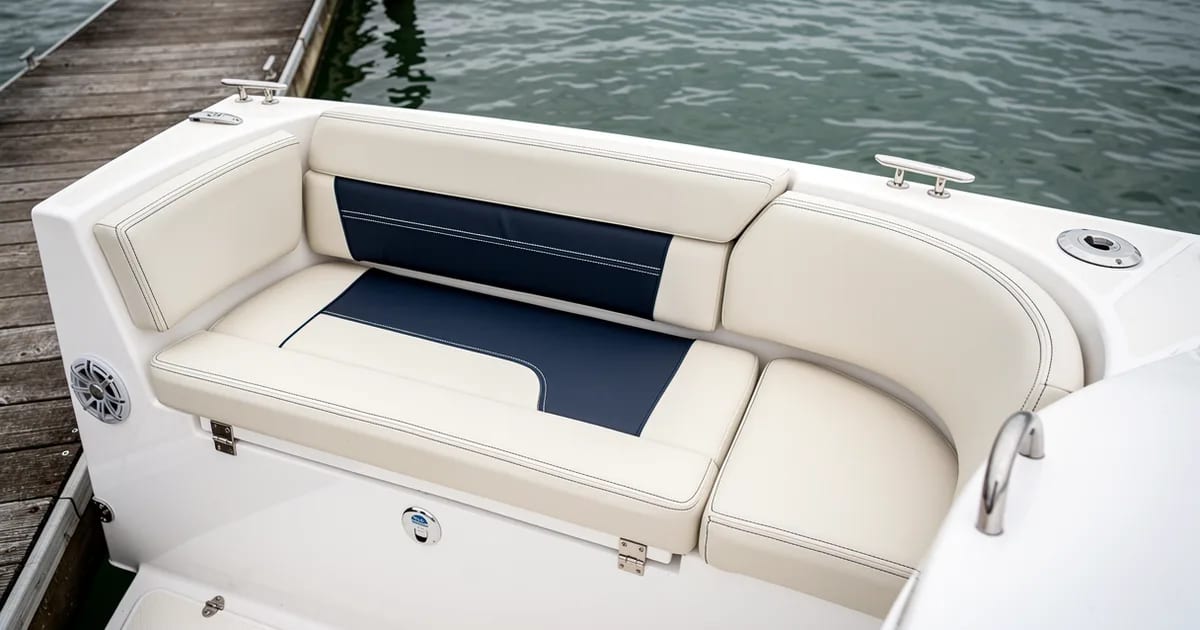
It takes measurements and templates directly on your piece. This step settles everything after it. A pattern cut from a generic template pulls in the wrong places, and a pattern traced from an old stretched cover repeats the stretch to the last stitch. A pattern taken off your own boat gives a piece that holds its line season after season, because nothing forces it.
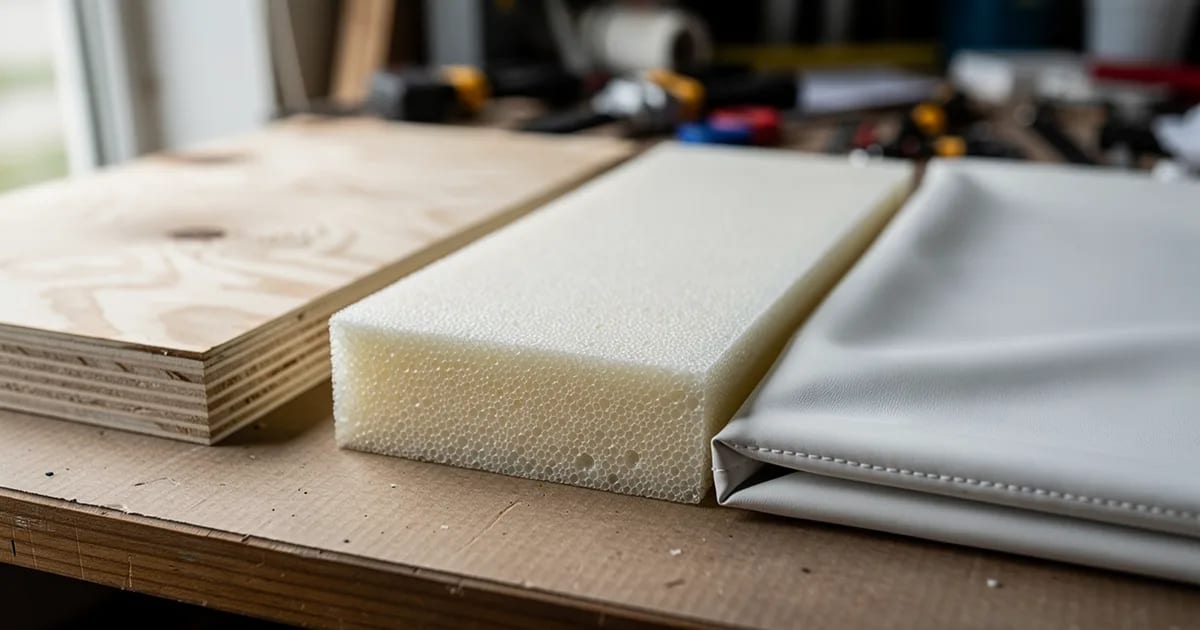
It looks at what is underneath. On a boat bench the wooden base counts as much as the cushion. A base that is finished gets remade in marine plywood and never covered over, because a new cover on a soft base goes slack within a season or two. What the wooden base under your seat changes has its own article.
It brings out the samples. You look at them on your boat or in your garage, in the light the piece lives in. Leather and marine vinyl show a different colour under shop lights and under dock sunlight. You pick a shade you will still like in five years.
The quote: where a real number first appears
After the visit, Annie writes an itemized quote: the materials chosen, the estimated lead time, the terms.
This is the first place a real figure appears, and it is on purpose. A price given by phone before anyone has seen the piece, and before the material is settled, means nothing. Two boats of the same model do not always have the same number of cushions, or the same structure under the benches.
The lead time sits in the quote beside the price. It depends on the workshop's load and on the material. A canvas or leather ordered in sets its own calendar, and a supplier who keeps only a small quantity of it picks the date for the workshop.
Nothing is cut until you say yes.
The weeks in the workshop
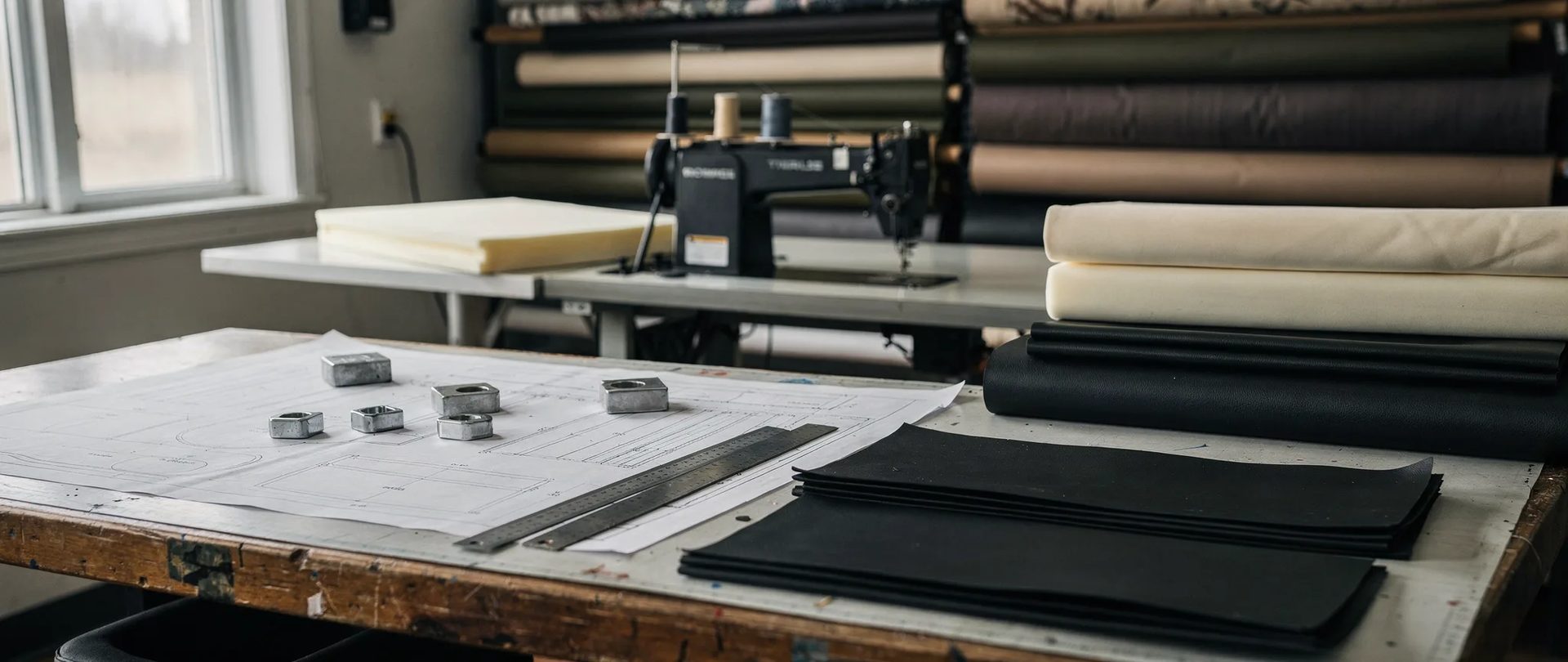
The work is done at the workshop on the Rive-Nord, by appointment, by one person. One artisan from quote to delivery: cutting, sewing, assembly, inspection. Nobody else touches your piece.
Plan on four to eight weeks depending on the season. That is an average. A full boat or car interior takes longer than a set of cushions.
It is also the quietest part of the trade. Thread in a specific colour is ordered in and can take weeks to arrive. A complicated piece sometimes needs a second pattern before the cut is right. These delays are real, and the quote names them.
You have nothing to do in the meantime. Ask for an update whenever you like.
Installation, or delivery
Two endings are possible, depending on the piece.
Annie comes back to your place to install anything that mounts on the object: benches to refit, canvas to adjust on its frame, a classic car interior set panel by panel. It is the same trip as the first visit, to your dock or your garage.
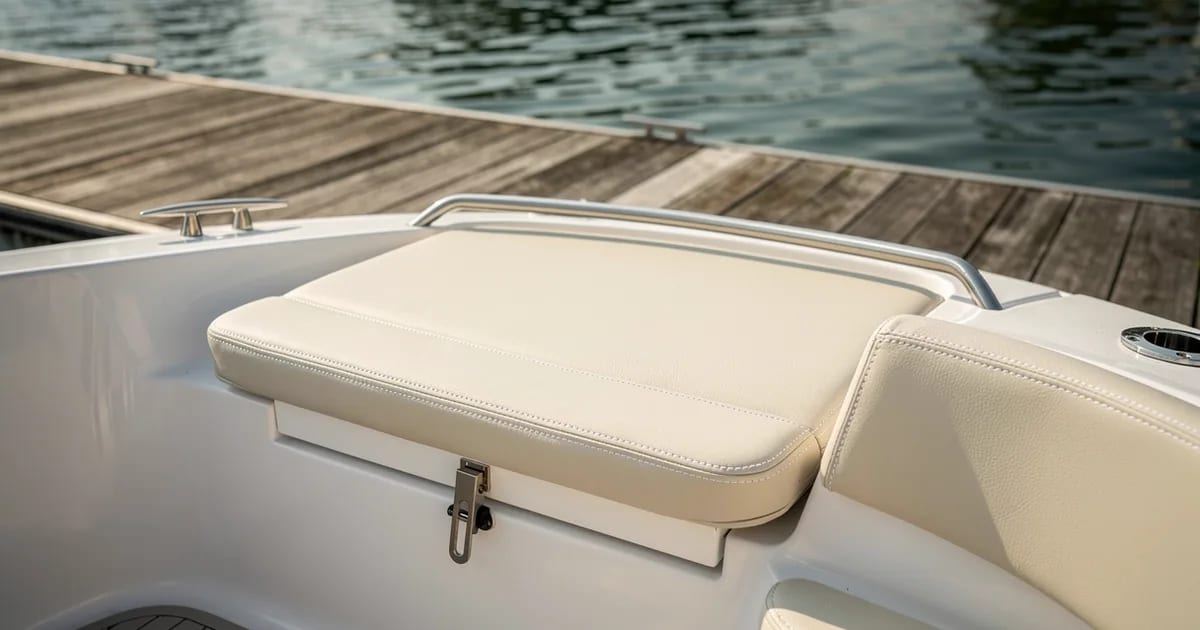
A piece that travels and sets in easily is delivered, or picked up at the workshop. Cockpit cushions, for example.
New canvas always goes on at your place. A cover is set under tension on your boat's frame, and the right tension can be set only on the boat. It keeps the cover from flapping in the wind and wearing out at its own seams. Boat covers and tonneau covers all follow this path.
Follow-up, and the adjustment that sometimes comes
The job does not end at installation.
A piece sometimes comes back a few weeks later, once you have boated or driven with it. New material settles, a seam beds in, and a detail that went unseen in the workshop shows up in use.
The work is guaranteed. The adjustment is free.
It is an informal guarantee with no paperwork. It is worth the word of an artisan who works by referral on the Rive-Nord, and it holds.
When to call, by season
Spring is the busiest stretch of the year. Your boat is in the water from April to October, and everybody thinks of it in April.
Winter is the best time for a marine job. The boat is in storage, you are not using it, and the workshop calendar is more open. Your seats and canvas are ready for launch day, so nothing waits until midsummer.
For a classic car the timing follows the car. Book the work while it is parked for the season.
In both cases the rule is the same. Count the lead time backwards from the date you want to use the boat or car, add a few weeks for material, and call then.
Six steps, one contact
A call, a visit at your place, a quote, the weeks in the workshop, installation, follow-up. The whole sequence is laid out before anything starts, and that is all there is to it.
Marine upholstery and trim on one side, classic car interiors on the other. Marinas and restoration shops are welcome as subcontract clients, one boat or one fleet at a time.
Custom upholstery and trim, workshop by appointment, Montreal's Rive-Nord, with travel to Laval, Saint-Laurent, the Laurentians and Lanaudière. The conversation and the work happen in French: ask for a free quote, or call 514-298-7735 (French only).