Every fall, your boat comes out of the water and goes into storage under some kind of wrapping. At Marina d'Oka, the storage contract starts on September 15.
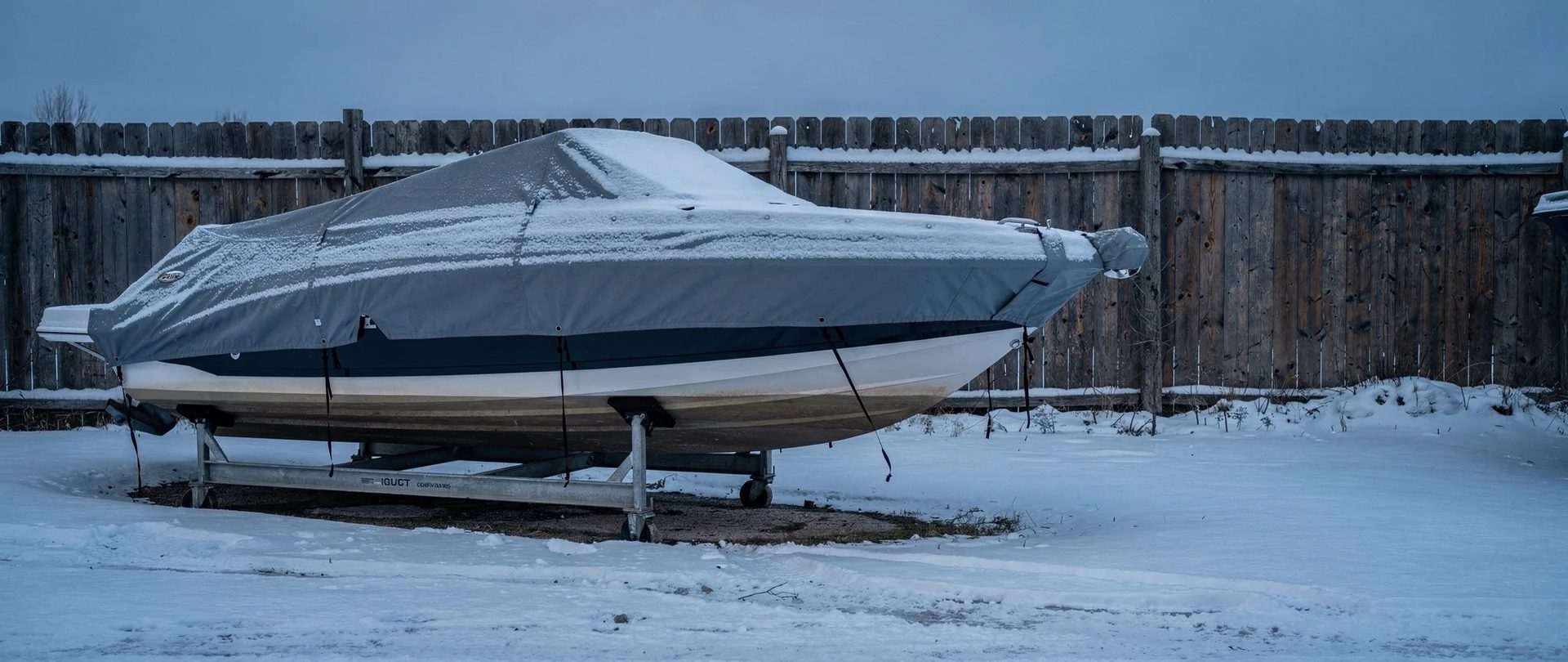
Outside, your boat spends the winter under the snow.
Every fall, your boat comes out of the water and goes into storage under some kind of wrapping. At Marina d'Oka, the storage contract starts on September 15.
Outside, your boat spends the winter under the snow.
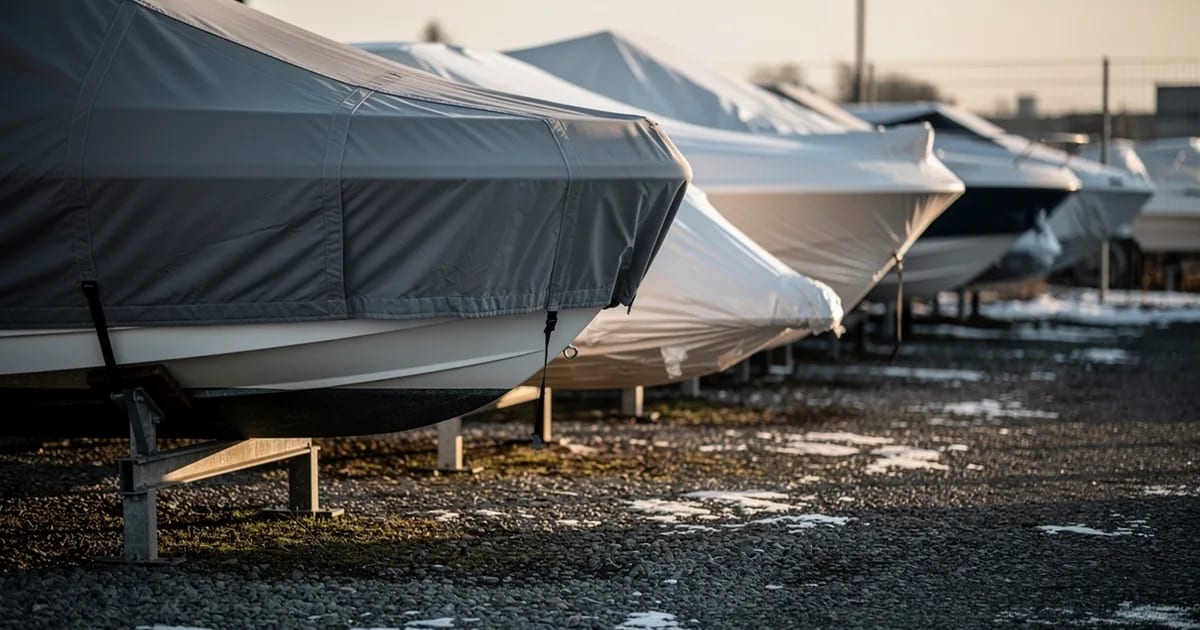
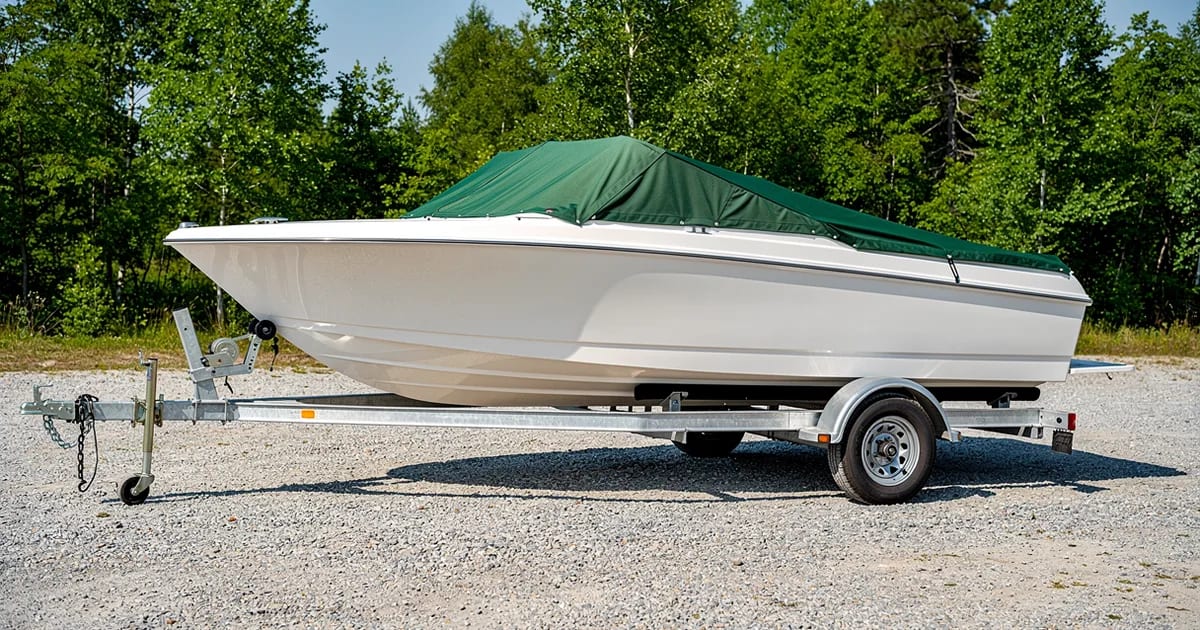
The same two options come up at the dock every year. Shrink-wrap, put on new every fall. Or a custom winter boat cover, sewn to the dimensions of your speedboat or bowrider.
Both keep snow and rain off your boat. They differ in how long they last, how they breathe and what holds them up.
Shrink-wrap is heat-shrunk onto the boat in the fall and cut off in the spring to get the boat out. Mercury Marine describes it as a single-season product.
It goes on at the marina, or at your place through a mobile service.
Every fall, the job is done and paid for again. Zipper doors and vents are added on top of the base price.
In the spring, the cut plastic goes to the landfill or to recycling. Ask your marina what it does with it.
A covered boat has to breathe. According to the BoatUS Foundation, a winter cover with no ventilation traps moisture underneath, and mildew sets in.
Shrink-wrap lets no air through. According to Big Shrink, it sweats on the inside as the temperature swings.
That water drips onto the deck, the console and your seats.
Vents set into the wrap keep air moving. The winter covers Annie sews have their own vents.
Cushions left damp over the winter go mouldy too. The fall routine for vinyl and canvas is in the article what a Quebec winter does to leather, vinyl and canvas.
For a winter cover cut to your boat, ask for a free quote. You can also text a photo of your boat to 514-298-7735 (French only).
Snow and water have to slide off the cover. With no poles or frame underneath, they collect in a low spot and the cover gives way.
The BoatUS Foundation tested winter covers with the supports that came with them. Fabrics stretched, stitching pulled and poles broke under the weight of the water.
Extra poles and straps had to be added before water and snow would run off the cover.
A cover is cut to whatever holds it up. Replace tired or missing poles before the cover is measured, and show Annie your boat's frame that day.
A well-fitted cover leaves no slack on top. Slack makes a pocket, and the pocket holds water that stretches the fabric.
According to a marine fabric comparison from American Marine, a solution-dyed acrylic cover lasts 10 years or more with proper care. Coated polyester fades, and its coating starts to fail after 4 to 6 years of hard sun.
Sattler acrylic canvas is sold on its resistance to UV, mildew and water.
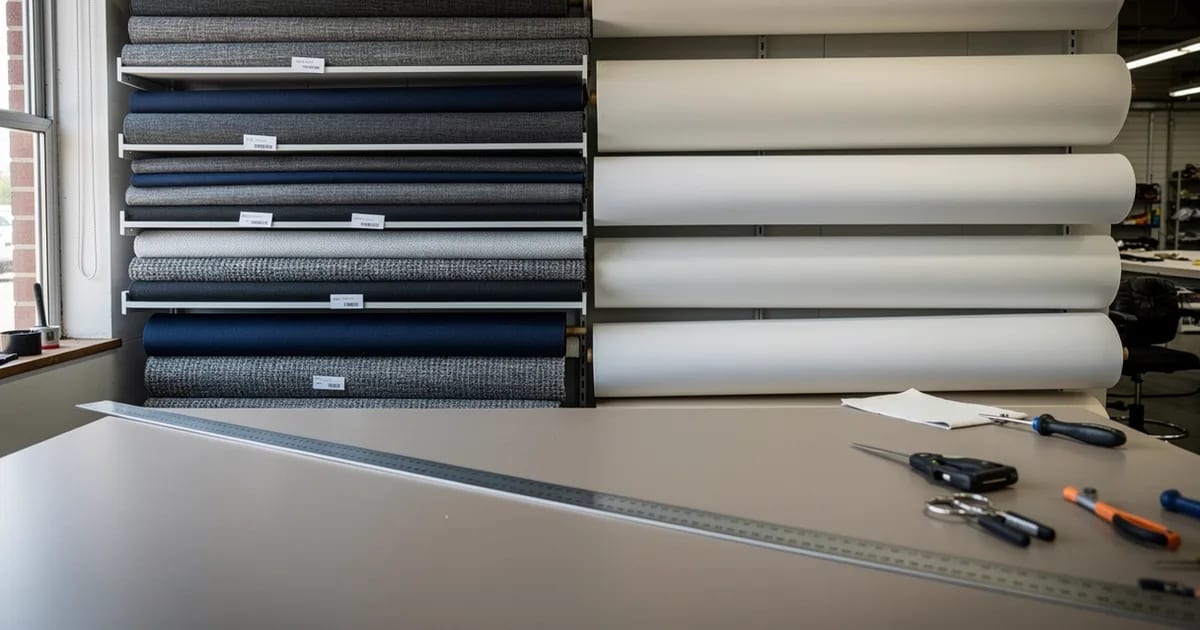
Annie picks the fabric with you, based on your boat and where it spends the winter.
Seam and fabric wear are covered in the article boat canvas lifespan in Quebec.
The same cover goes back on your boat every fall. It goes on and comes off with no heat gun and no plastic to throw away.
Around Montreal, boats go back in the water between May 1 and May 15.
A winter cover is measured on your boat. Plan the measuring while your boat is easy to reach, before storage or in the spring.
Annie sews custom boat canvas, boat covers and tonneau covers, in a by-appointment workshop on Montreal's Rive-Nord. Ask for a free quote or text a photo of your boat to 514-298-7735 (French only). The call, the quote and the work are in French.
With your permission, we use Google Analytics to count visits: the pages viewed, how you reached the site and your approximate location. Without it, no measurement cookie is set. You can change your mind at any time in the privacy policy.