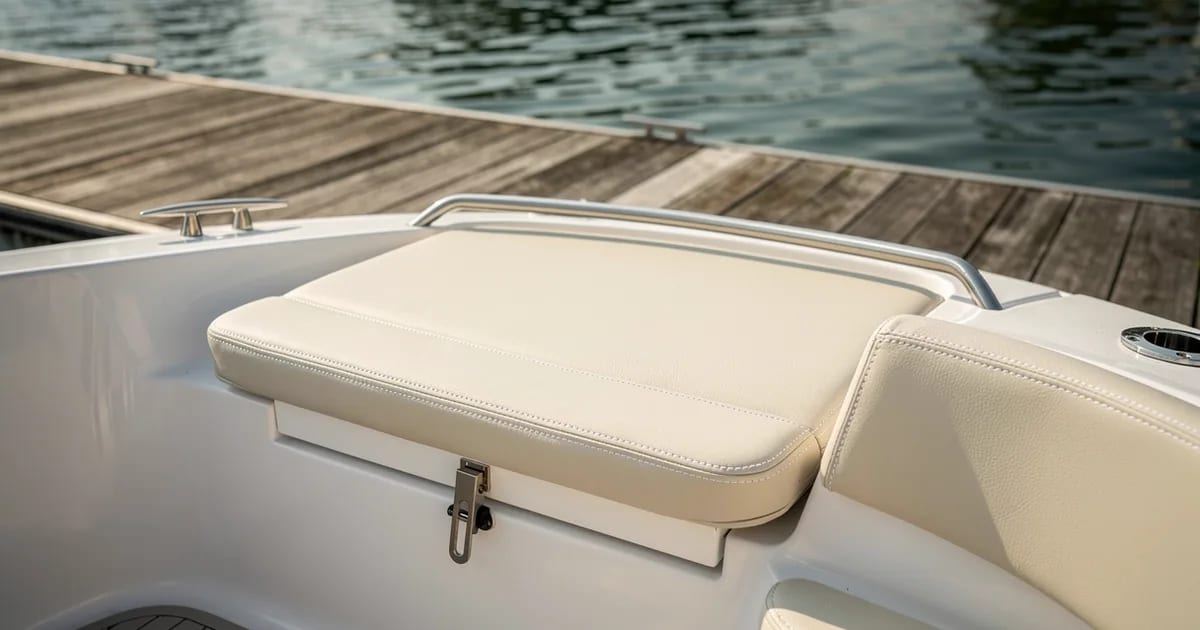
A replacement seat is cut for a model. It goes on, it closes, and it fits roughly.
The gap between roughly and exact rarely shows on installation day. It shows in the second season.
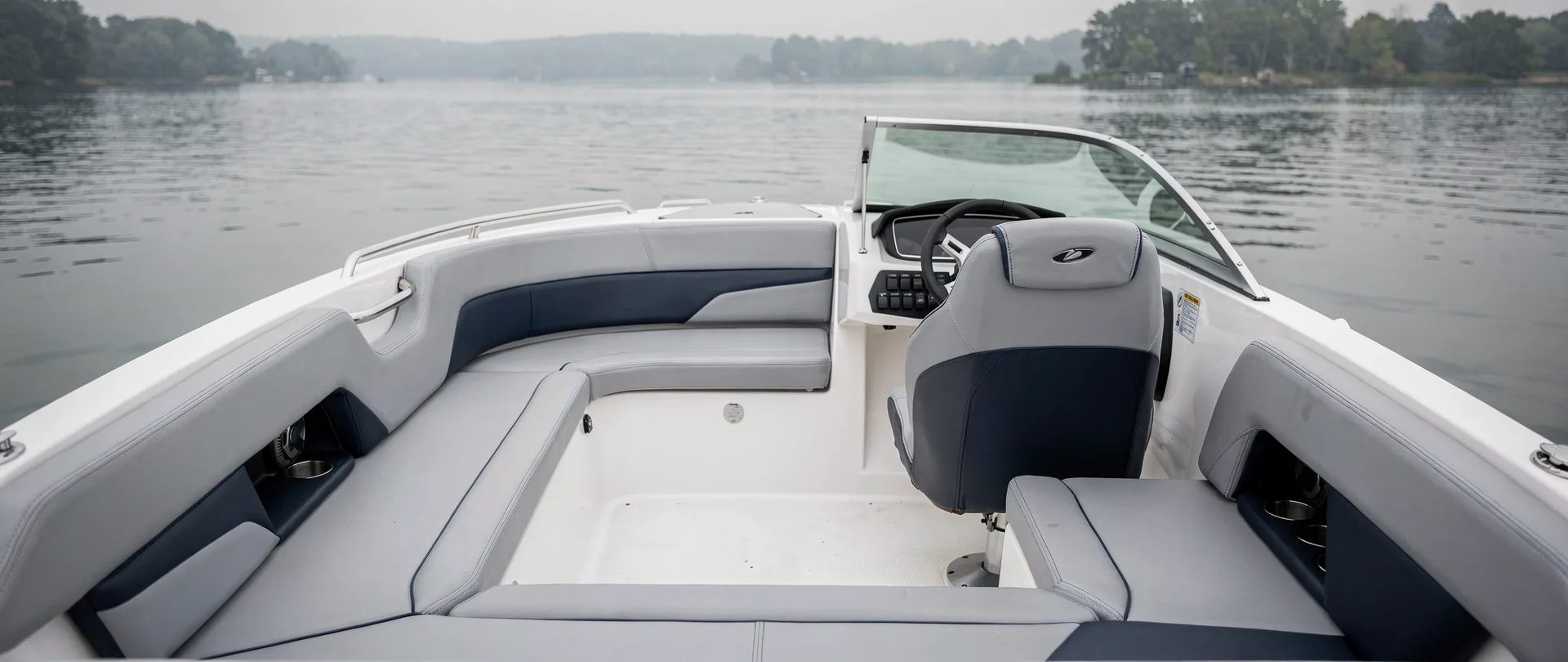
A replacement seat is cut for a model. It goes on, it closes, and it fits roughly.
The gap between roughly and exact rarely shows on installation day. It shows in the second season.
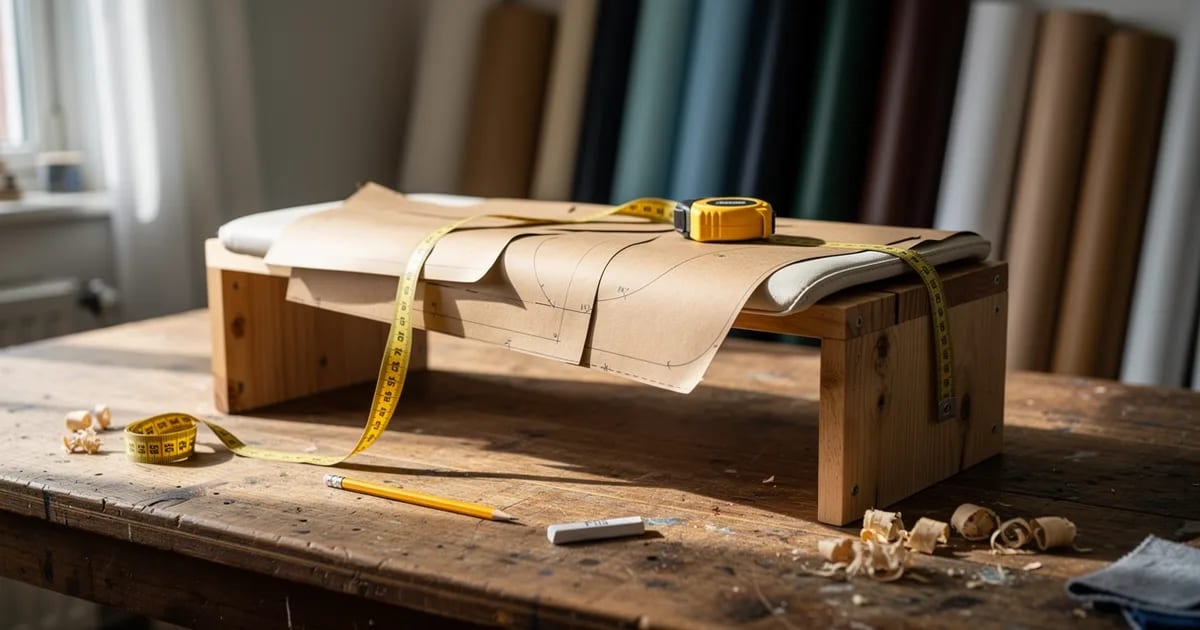
This article names the signs you can spot yourself, what causes them, and the cases where the catalogue part is still the right answer.
The full comparison between custom work and a ready-made part is in another article. This one covers a single question: fit.
A catalogue covers a model and a range of model years. Your boat is one particular boat inside that range.
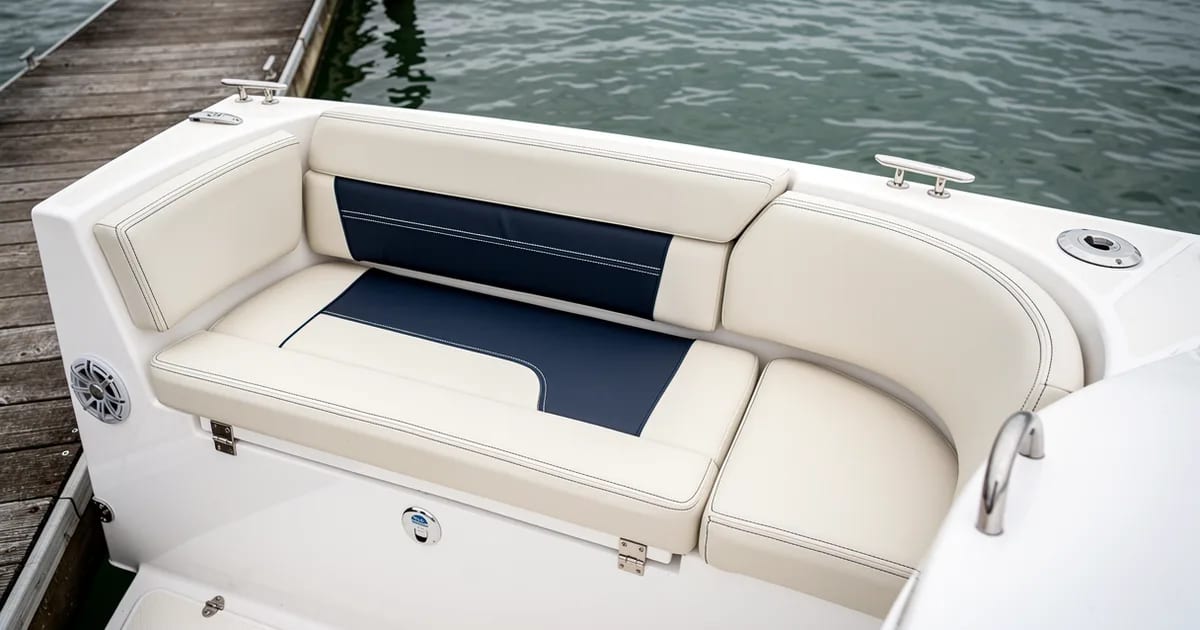
Two boats of the same model do not always have the same number of cushions, or the same structure under the benches. A previous owner moved a console, had a bench redone, added a seat. None of that shows on a compatibility sheet.
Every dimension on a production pattern is a rounded average. On its own the error is small. Added up along the length of a bowrider bench, it stops being small.
Four signs give away a pattern that did not come off your boat.
A wrinkle that keeps returning to the same spot. You smooth it out and it comes back. The pattern pulls where it should not.
A cover that slides or turns. A piece cut to size stays where it is because its shape holds it. A piece cut oversize is held by its fasteners alone.
A seam that misses the cushion edge. A seam is the thinnest part of a cover. A seam that lands on the corner of the cushion spreads the load. Laid flat across the seat, it takes the weight head-on and gives way before the rest.
A fastener you have to force. A snap that takes two hands on installation day will take more in the cold. The material around the fastener is what finally lets go.
All four say the same thing. The piece is under tension where it should not be, all the time, even when nobody is sitting on it. That background tension wears it out.
If one of these signs already shows on your seats, the marine upholstery and trim page describes what a full set remade covers, cushions and structure.
Remaking a piece from the old one looks like the safest way to get an exact fit. It works the other way around.
A cover that has seen ten seasons has already given way somewhere. A pattern traced from it records the sag. The new piece starts from where the old one ended, and the first wrinkle returns before the season is over.
Templates are taken off your boat or your car for this reason: at your dock, on the trailer or in your garage, before a single piece is cut.
The four signs show to the eye. What happens under the cushion cannot be seen, and it decides just as much.
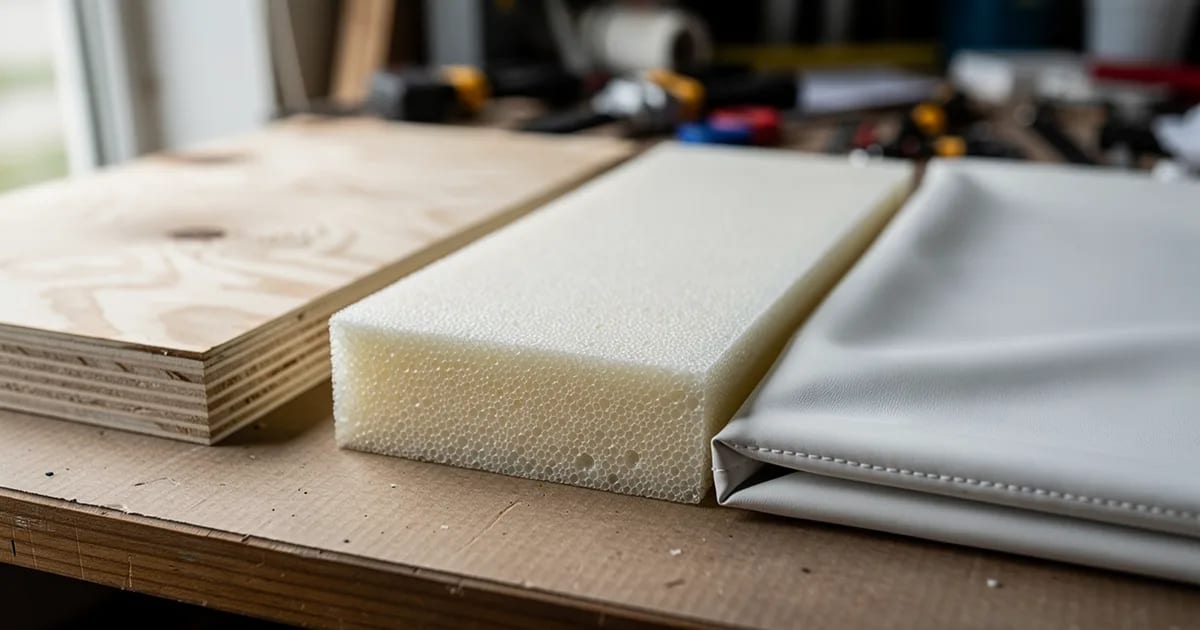
The wooden base under a boat bench soaks up water through the screw holes and the plywood seams. It softens without showing. The top looks intact while the structure under the foam no longer holds its shape. A new cushion on top sags in the same place as the old one.
A base in that state is replaced. It is never covered over and never doubled up, because the new seams would rest on what has already given way.
Marine plywood carries no rot treatment. APA, The Engineered Wood Association, says so plainly: no chemical treatment against decay is part of its definition. What it has is B-grade or better plies with no knotholes, and a waterproof structural glue. The glue holds in water, and delamination is the way a seat base fails.
The wooden base under your bench covers the subject in full. The custom boat cushions page describes the job, structure included.
On an older car, the reproduction catalogue answers one question well: what this model looked like leaving the factory. The fit problem comes from the car, and the new part is fine.
Fifty years of sun drain the suppleness out of a dashboard's vinyl. It stiffens, then it cracks. A door panel whose backing has swollen with humidity does not return to shape when a new panel is screwed over it. The headliner is stretched over a frame that has shifted.
A catalogue part fitted on a distorted support takes the shape of the support. It is the same mechanism as on a boat, with other materials.
What the catalogue really covers is worth a look before you order. The classic car services cover seats, panels, consoles and the headliner.
There are real cases where the stock part is the right answer. Naming them is part of the trade.
The test sits in the four signs. A piece that cannot wrinkle under tension, slide on its cushion, put a seam on an edge or force a fastener gains nothing from a pattern taken off your boat. A seat cover laid over a sound bench is exactly that.
A car kept strictly original is the other case, for a different reason. The question the reproduction catalogue answers is precisely that one.
In these two cases the shelf does the whole job.
A pattern taken off your boat removes the tension.
Seams land on the edges. Fasteners close with one hand. The wrinkle that kept returning to the same spot has no reason left to form, because nothing pulls to make it.
The visit happens at your place: the marina, the garage or the trailer. You see the samples on your boat, in the light it lives in. The quote follows: materials, estimated lead time, terms. The work is guaranteed. If an adjustment is needed after installation, it is done at no charge.
The full sequence, step by step answers the next question.
Custom upholstery and trim, workshop by appointment, Montreal's Rive-Nord, with travel to Laval, Saint-Laurent, the Laurentians and Lanaudière. The conversation and the work happen in French. If your seats show one of these four signs, ask for a free quote or call 514-298-7735 (French only).
With your permission, we use Google Analytics to count visits: the pages viewed, how you reached the site and your approximate location. Without it, no measurement cookie is set. You can change your mind at any time in the privacy policy.