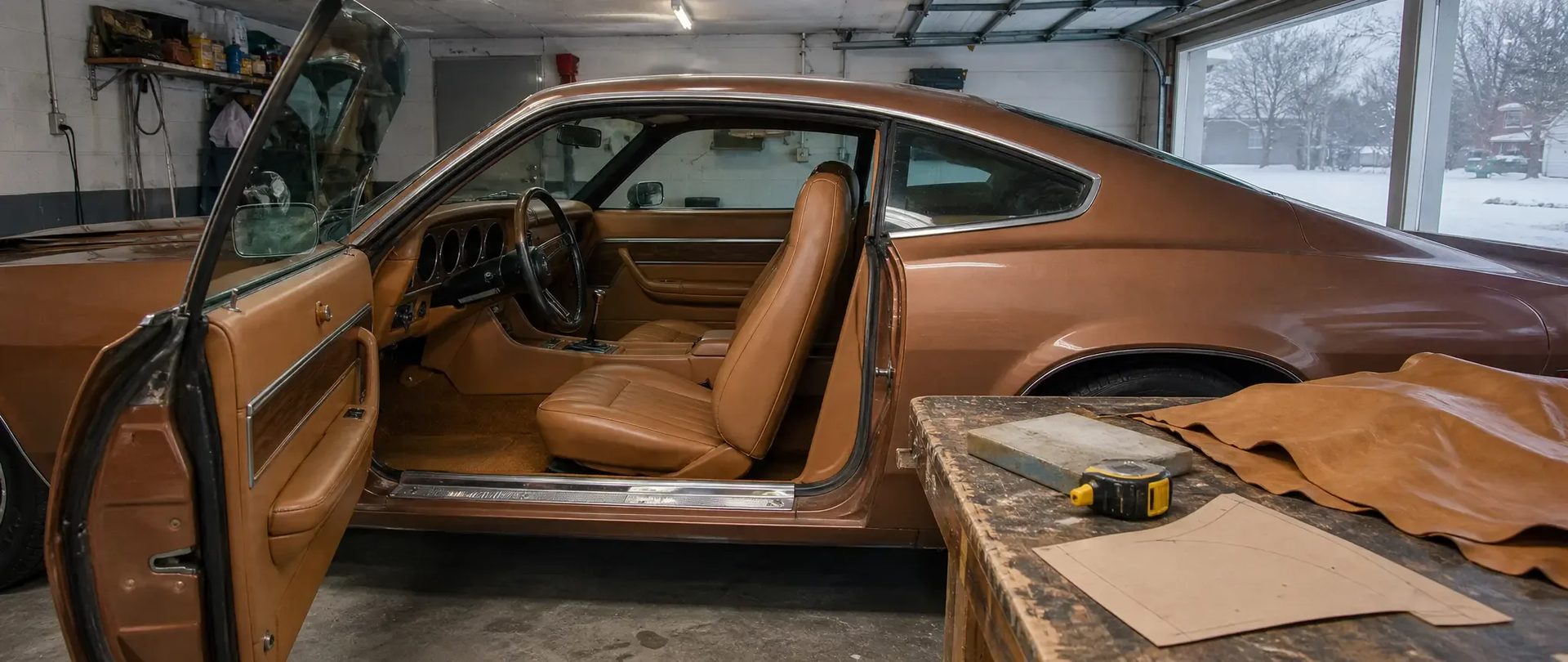
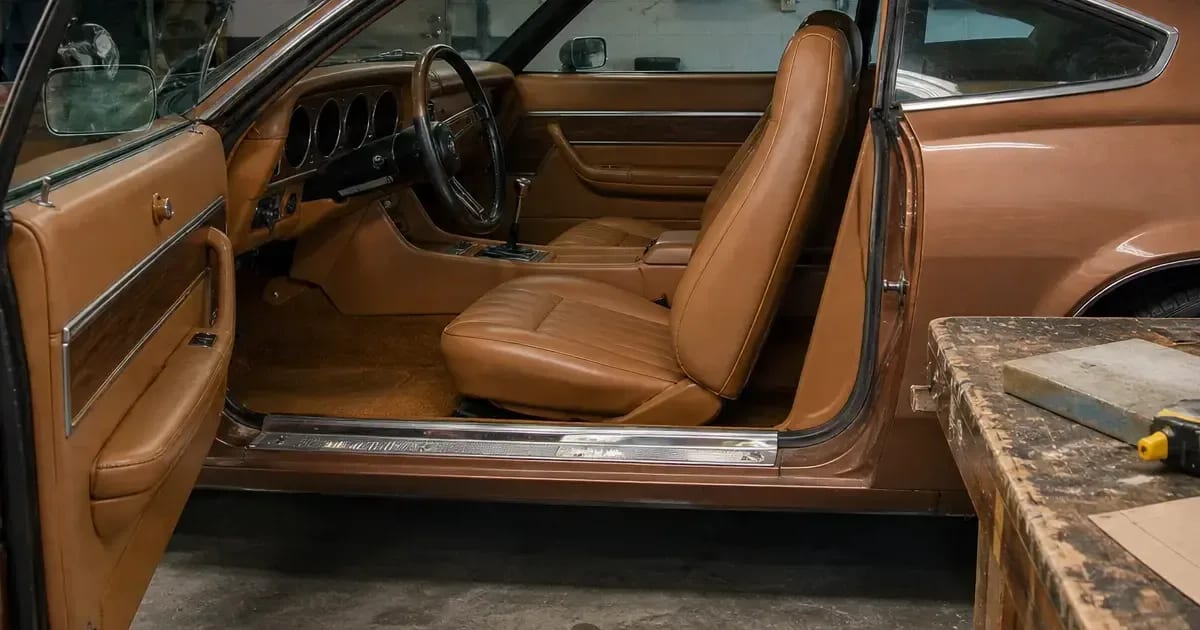
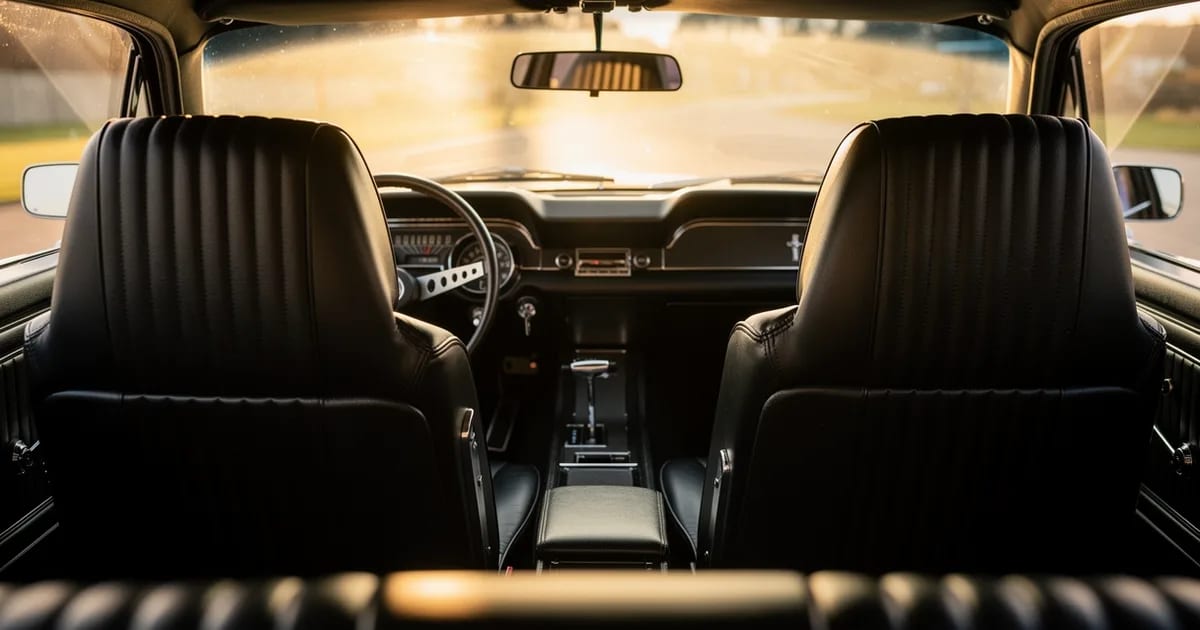
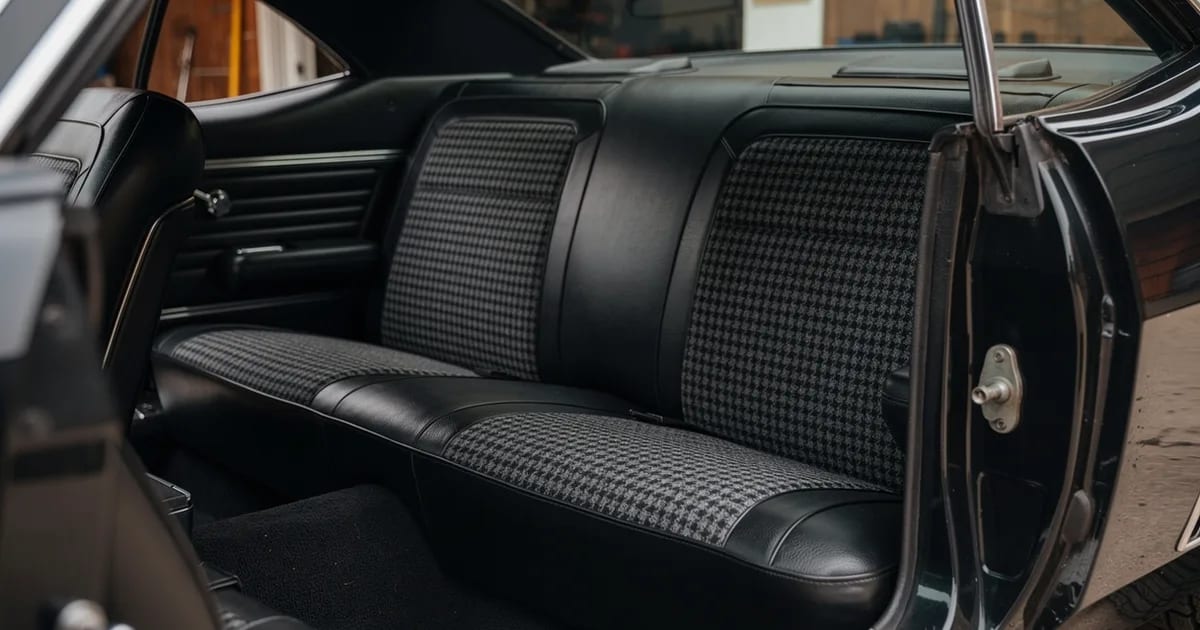
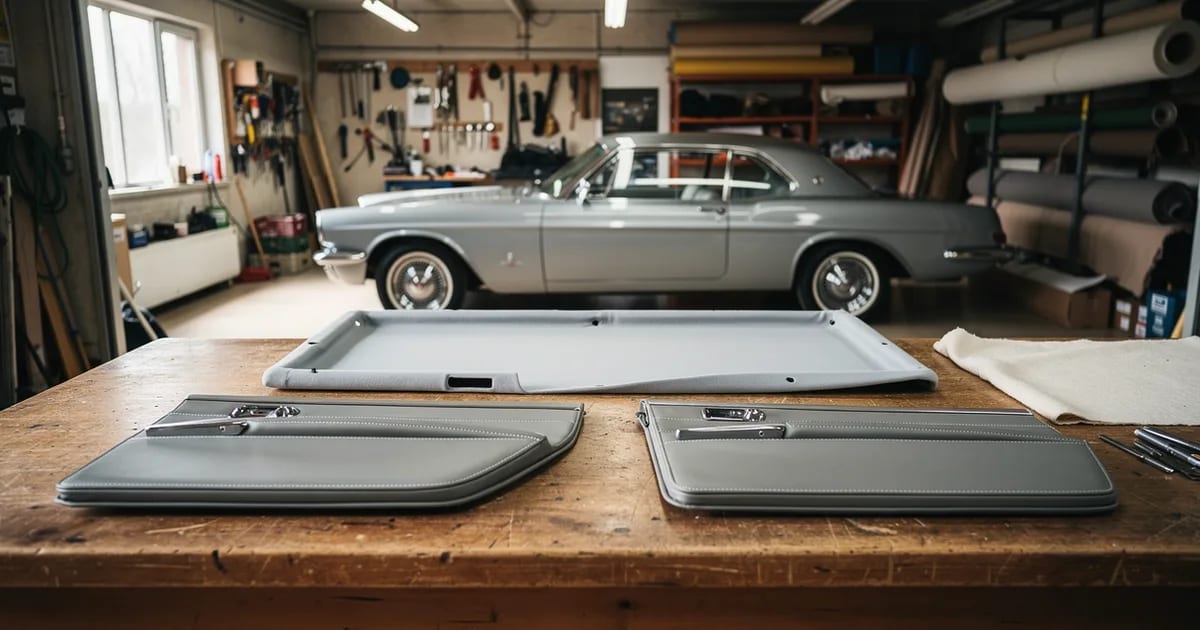
Here is where the line sits, part by part.
1967 or 1974 Corvette: your year decides the part
The National Corvette Museum publishes a specification listing for each year. Those listings say the following.
1967 (C2). The bucket seats are vinyl, with a grain that imitates leather. Leather is an option, offered in five colours: black, red, bright blue, dark blue and saddle. The headliner is new that year, in vinyl over foam and fibre. The carpet is deep-twist, and the instrument panel is padded and covered in vinyl.
1974 (C3). The Custom interior is an option in silver, medium saddle or black. It puts leather on the seating areas, adds cut-pile nylon carpet and woodgrain vinyl inserts on the doors and console.
1977 (C3). According to the 1977 listing, Custom-level trim becomes standard, with seating surfaces in leather or in cloth and leather.
That matters for two reasons. First, a cover, a panel or a carpet chosen for the wrong year may not match your car. Second, if you want faithful to the original, the pattern, the material and the colour are taken from your car and from the documentation for your year.
Your leather: on the factory list, so possible as the original
On a 1967 Corvette, a leather interior can be the factory one. The colour is then chosen from the ones Chevrolet offered that year.
On a 1974 C3, the leather of the Custom interior covers the seating areas. The door and console inserts are woodgrain vinyl. A car that stays faithful to the factory keeps that split, material by material.
If your project goes beyond the list, it is custom work: leather on a piece the factory made in vinyl, a colour the year did not offer, a stitch pattern that never existed. The choice between the two materials is covered in the article on leather or fabric for a classic car interior.
Your seats: the cover is made, the structure is sorted first
A Corvette seat is more than forty years old, and most are older. Under the cover sit foam and a structure that have served all those years.
Before ordering a set of covers, ask what it includes: the foam, the listing wire that holds the pleats, the hardware. A back that leans or a cushion that leaves you lower than the passenger seat is sorted before any sewing. A new cover takes the shape of whatever is under it, and a flawless cover over a soft cushion goes back to the same hollow within a season or two.
Annie says so at the evaluation visit, before cutting. When a seat is remade completely, the cover is cut to the pattern of your own seat, the foam is cut to the density that seat needs, and the two are assembled together. Boat cushions with a soft base follow the same principle on another structure.
Your door panels and your headliner
The museum listings give the original material for these parts: a headliner in vinyl over foam and fibre in 1967, woodgrain vinyl inserts on the doors in 1974. A car that stays faithful to the factory takes up those materials and those patterns.
A piece that departs from the factory list appears in no original documentation. It is made on the part itself, to the pattern of your car. The details of that work, panels and headliner, are in the article on the headliner and door panels of a classic car.
Faithful to the original or custom: the documentation exists
The NCRS publishes a technical information manual and judging guides for 1963-1967, and another for 1968-1982. According to the NCRS, they describe part by part how Corvettes looked at final assembly.
If your car is aiming for original, that guide is the reference to bring to the evaluation visit. If it is aiming for your own vision, it is the starting point for deciding which parts depart and by how much.
What is left to have sewn for your Corvette
The split, in one line. Seats, and anything that departs from what Chevrolet offered that year, are made on your car. The rest is settled with the documentation for your year.
Annie does the making: seat covers, foam, panels, headliner, console, armrests, trimmed trunk. The work on a classic car is set out on the classic car interior restoration page. For the leathers, the grains and the finishes, see automotive and marine leather. The same part-by-part split is described for another car in the article on the 1965-1968 Mustang interior.
A word on expectations. A made interior does not get settled in a week, and some leathers have to be ordered from a supplier. It also happens that a seat needs an adjustment after a few weeks of use, once the foam has taken its shape. That is part of the work.
Annie is not a Corvette specialist. She works on any classic car model, faithful to the original or custom to your vision.
Measuring happens in your garage, on your car, before a single piece is cut. Custom upholstery and trim, workshop by appointment, Montreal's Rive-Nord, with travel out to Laval, the Laurentians and Lanaudière. That visit runs in French, like the quote and everything after it, so an owner who reads this in English and speaks French is on the right page.
Ask for a free quote, or call 514-298-7735 (French only).