Marine
Marine upholstery in Montreal when the shop works in French
· 7 min read · Atelier Annie Dallaire
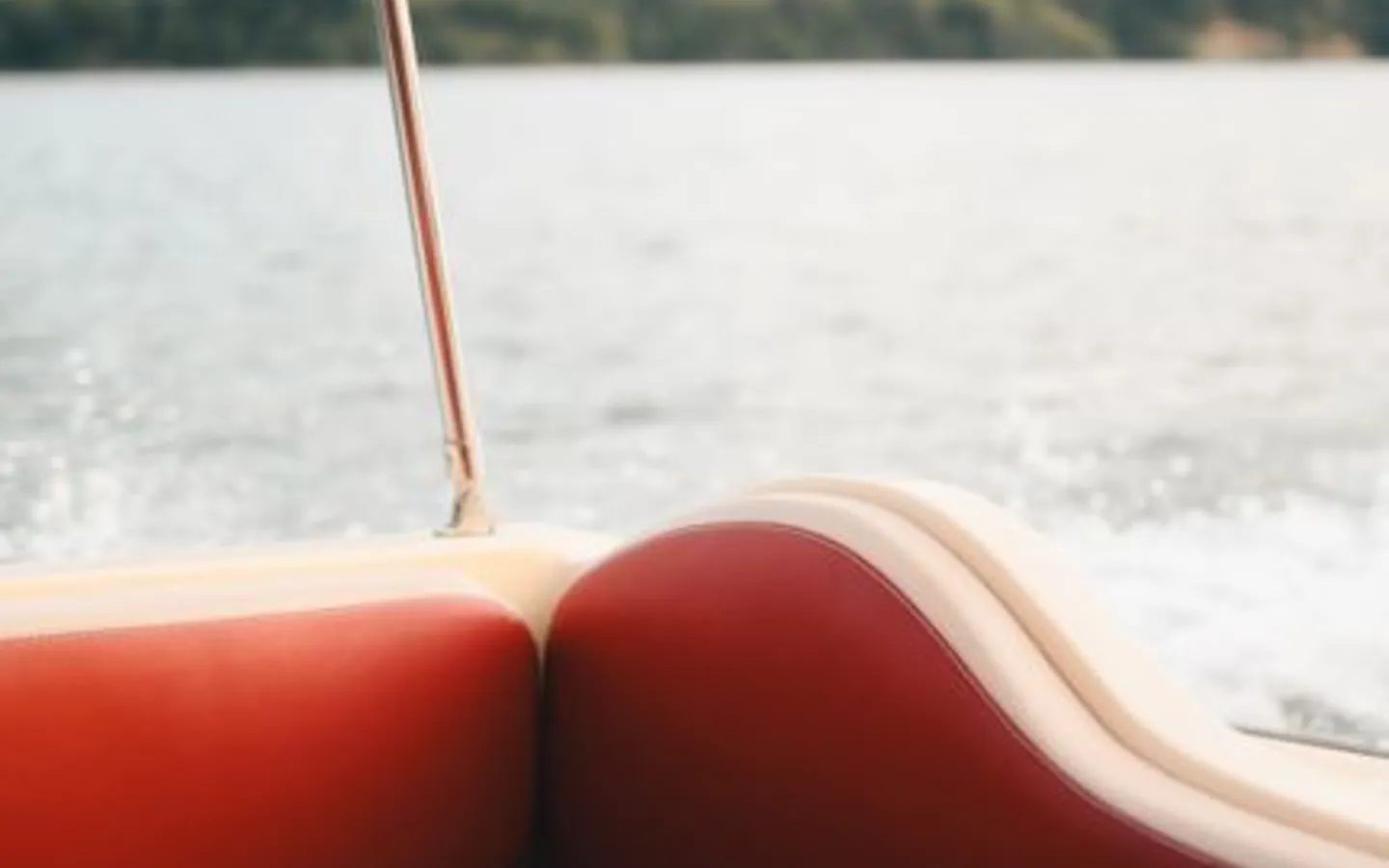
You own a boat somewhere north of Montreal, the seats are done, and you start looking. Search for marine upholstery in Montreal and the shops that come back are real, competent and almost entirely French.
That is not an oversight. Upholstery and trim is a French-language trade here, and most shops around Laval and the Rive-Nord have never had a reason to write a page in English.
Atelier Annie Dallaire is one of those shops, with one difference. This site is in English. The phone line is not, because Annie does not speak English. That belongs at the top of the page.
So here is the plain version: what the trade actually makes, how a quote gets built when the measuring happens on your boat, and how the whole thing works when the shop works in French.
What a marine upholstery shop in Montreal actually makes for your boat
Three families of work cover most of what a boat needs, and owners often do not know they belong under one roof.
Seating. New covers cut to your own seat, in marine vinyl or marine leather chosen for the sun your boat actually takes, over foam picked for the use you give it so the cushion holds its shape season after season. Thread matters here more than most owners expect: on a helm seat people stand on, a thread chosen for UV and salt buys extra seasons before anything lets go.
Canvas. Full boat covers and tonneau covers. Cut to your boat's frame and windshield line, which is why a used cover almost never sits right on a hull it was not made for.
The wooden base under the seat. On most speedboats there is a plywood panel under the foam holding the pedestal screws. When it has softened, Annie remakes it in marine plywood so the new cover has something solid to be stapled to and does not shift in its first season.
Alongside those, there is leather work for interior panels and consoles, and embroidery for a monogram, a boat name or a club logo on a headrest or a cushion.
Canvas, seating and the wooden base: one shop or three
In most cases those three jobs come from three suppliers. A canvas shop sews the cover. An upholstery shop does the cushions. Nobody does the wood, so a soft base gets covered over, and the new seat starts moving again within a season or two.
Three suppliers also means three rounds of measuring, three lead times and three people who each saw one part of your boat.
Having the cover, the foam and the base done in one pass removes that. Other Quebec shops work in wood as well. It is simply the reason the quote for your boat covers the whole seat.
How the quote works when the measuring happens on your boat
The first conversation is about the project: which pieces, what condition, and when you need the boat back on the water.
Then Annie travels to wherever the boat sits. A marina slip, a trailer in your driveway, a garage in Lanaudière. Measurements and patterns are taken there, on your boat, and the materials get chosen with the hull in front of you.
The written quote follows: materials, estimated lead time, terms. It names what your boat receives.
Fabrication happens at the workshop on the Rive-Nord de Montréal. Then the pieces come back for installation, or are delivered or picked up depending on the size.
The honest part of that timeline is worth stating. Four weeks or more before a new project starts is normal, and a full cockpit takes longer than a single bench. A particular colour or a specific canvas frequently has to be ordered in, and that wait is real. It also happens that a seat comes back once after installation for an adjustment, when new foam has settled under use. Annie stands behind her work and that adjustment carries no charge.
Working with a French-only shop, in practice
This is the part no competitor page can tell you, so here it is directly.
The phone line is 514-298-7735 (French only). Not a preference, a fact: a call in English is a call that goes nowhere for both of you. The contact page is where a written request will land once the form is live.
Four things make the difference between a smooth first exchange and a wasted one.
Write it down before you get in touch. Make, model and year of the boat. Which pieces: helm seat, bench, sun pad, full cover, tonneau cover. Whether the foam feels flat or the base moves. Where the boat sits and in which town. When you need it back.
Put that list into French if you can. A translation tool handles a boat's make, a list of pieces and a set of dates without much room for error. It struggles with nuance, which is exactly why the list format works better than a paragraph.
Bring someone bilingual to the call if you have one. A marina manager, a mechanic or whoever winterizes your boat usually is, and that call takes five minutes.
Let the boat do the talking at the measuring visit. Pointing at the seam, at the corner that gave out, at the panel you want covered settles more than a paragraph does, in any language. A boat is a physical object, and that is the one advantage this trade has over most.
Expect the quote and the follow-up in French. The numbers, the material names and the dates survive translation cleanly, and a fabric reference is usually the same word in both languages.
Rive-Nord, Laval, and how far Annie travels for your boat
The workshop is on the Rive-Nord de Montréal and works by appointment. It is a home workshop, so the address is not published, and visits are arranged in advance.
Travel for measuring and installation covers Laval, Saint-Laurent, the Laurentides and Lanaudière as a matter of course. For a larger contract, roughly 250 kilometres, about two and a half hours of driving, is as far as it goes.
Marinas and restoration shops are welcome as subcontract clients on the same terms, and a good share of the work already arrives that way.
If your boat needs seating, the marine upholstery and trim page covers the seating and cockpit side. For a cover or a tonneau, the custom boat canvas page walks through how a canvas is cut for a specific hull. And if the cushions are the whole job, custom boat cushions goes through foam, covers and the base underneath.
Frequently asked questions
- Can I have marine upholstery work done near Montreal if I do not speak French?
- Yes, and it is worth planning for rather than improvising. The phone line at Atelier Annie Dallaire is French only, so write your request out first: the make, model and year of the boat, which pieces are involved, where the boat sits and when you need it back. A translation tool handles that kind of list cleanly, and the measuring visit itself is mostly pointing at the seat, which needs no language at all.
- Does the shop come to the boat, or do the seats have to be brought in?
- For anything larger than a single cushion, measurements are taken on the boat, at your marina, on the trailer or in your driveway. A cover that has stretched over several seasons is not a reliable template, so the dimensions come off the boat itself. Smaller pieces can be dropped off at the workshop on the Rive-Nord de Montréal by appointment.
- How long does a custom boat seat or a new canvas take?
- Four weeks or more before a new project starts is the honest figure, and a full cockpit runs longer than a single bench. A specific colour or a particular canvas often has to be ordered in, which adds to the wait rather than shortening it. Booking in the fall or over the winter is the reliable way to have the boat ready for spring.
Related reading
- Boat canvas lifespan: what wears one out in Quebec
Boat canvas lifespan is not measured in years. UV, freeze-thaw and standing water decide it, and the stitching gives out well before the cloth does.
- Remaking a boat cushion: the base under your seat
Remaking a boat cushion without checking the wooden base means tensioning a new cover over a soft panel. It goes slack within a season or two. Here is the test.
- Remaking a boat cabin interior: where the work stops
Remaking a boat cabin interior is never one job. Here are the pieces that belong to an upholstery shop, the ones that go to a woodworker, and where to start.