Marine vinyl
Marine vinyl for seats, benches, panels. 32 oz and up, UV and saltwater resistant.
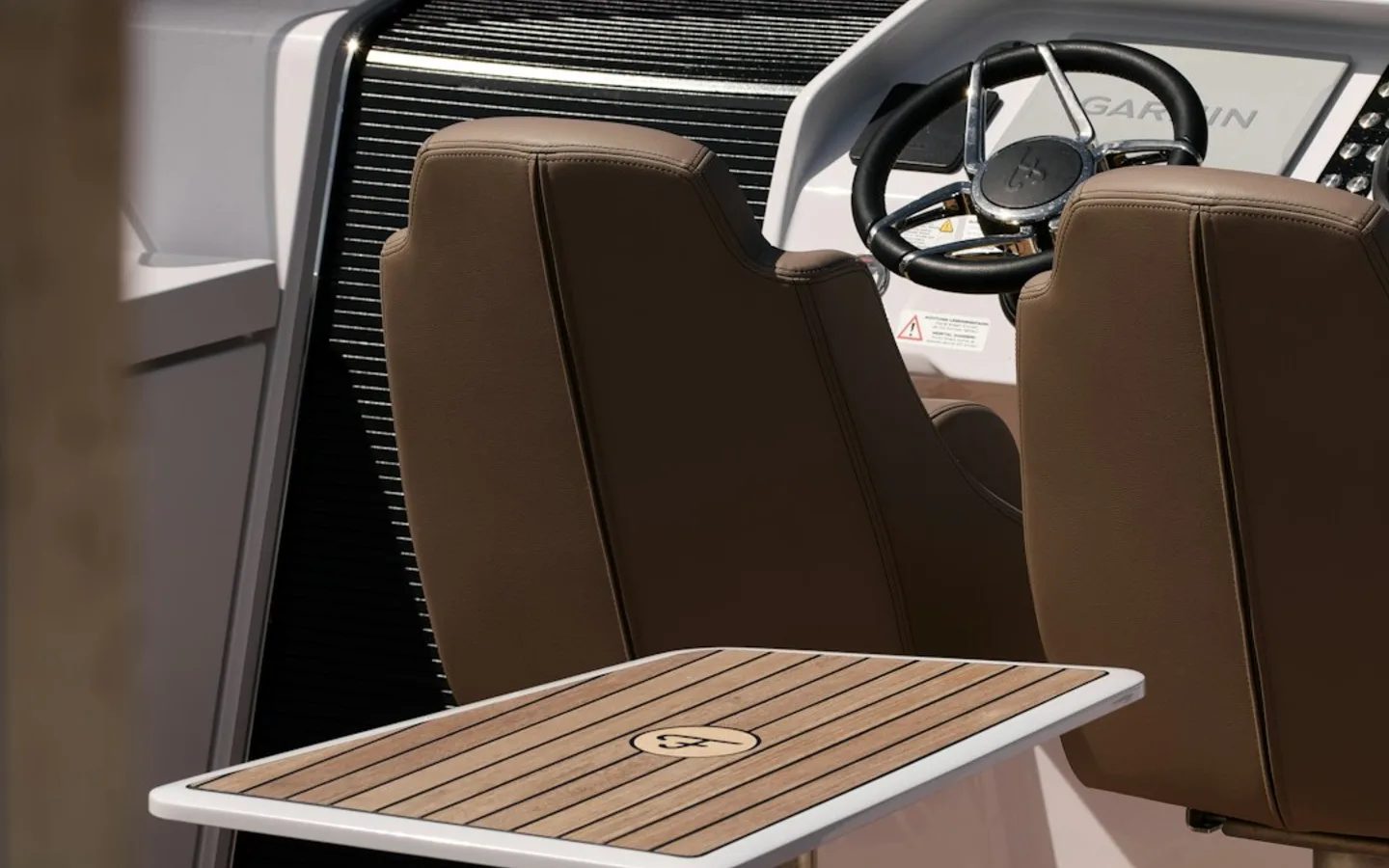
What is marine vinyl? A PVC vinyl treated for water and sun
Marine vinyl is a coated PVC vinyl, laminated to a knitted polyester backing, and treated to resist UV, salt water and mildew. The technical build comes down to three layers: a PVC plastisol base, a knitted polyester backing of 8 to 12 ounces per square yard, and a total thickness of 0.9 to 1.2 millimeters. The UV stabilizers (HALS, hindered amine light stabilizers) and the mildew inhibitor are built into the compound during manufacturing. That's what makes it last.
The difference between marine vinyl, auto vinyl and residential upholstery vinyl is concrete. Auto vinyl is softer and thinner, built for a car interior without continuous UV exposure. Residential upholstery vinyl holds up to neither sustained UV nor prolonged humidity. Marine vinyl is the only one that survives a boat cockpit season after season.
The marine industry recognizes three technical thresholds. A cold crack rating of -29°C or colder, per ASTM D2136. UV resistance of 500 hours or more under xenon-arc exposure, per AATCC 16. Abrasion resistance of 30,000 double rubs or more, per the Wyzenbeek method (ASTM D4157). Below these thresholds, the vinyl doesn't earn the marine label.
Where Annie uses marine vinyl
Annie sews marine vinyl for boat parts that take the sun and direct contact with water, tanning oil and salt water. The priority pieces are bowrider cockpit benches, outboard deck bench seats, runabout back seats, wakeboard boat captain's chair backs, and swim platform cushions. Owners on the St. Lawrence, on the lakes of the Laurentides and Lanaudière, and on Lac Saint-François make up Annie's main marine clientele.
Marine vinyl also covers secondary marine applications. Pontoons (full bench seating), jet boat seats, bow cushions, swim platform pads, personal watercraft seats. Worth noting for PWC owners in Quebec: Sea-Doo, built by BRP in Valcourt, uses marine vinyl as standard on the seat.
What Annie doesn't do in marine vinyl: repair of existing upholstery. Annie remakes from scratch; she doesn't patch and mend. No closed-cabin interior work either, where marine leather suits the job better. No residential use. For boat cushions in general, see custom boat cushions. For auto leather work on a classic car seat, see classic car leather seat reupholstery. For a full classic car interior, see classic car interior restoration.
Marine vinyl or an alternative: how Annie chooses
Marine vinyl is one of the materials Annie works with; it isn't the only one. Annie works with a network of Quebec suppliers and chooses the material by project, by expected use, and by the service life the client wants. No brand is fixed in advance.
Marine vinyl is the choice over Sunbrella canvas when the piece is in direct, constant contact with a wet body: seat, bench, cushion you sit on. Vinyl wipes clean in seconds; acrylic canvas needs sustained scrubbing for the same sun-oil or spilled-drink stains. Vinyl is waterproof and opaque; Sunbrella breathes but absorbs liquids. For boat covers and tonneau covers, see custom Sunbrella.
Marine leather is the choice over vinyl when the client wants a leather feel, a refined finish, and the piece stays out of continuous sun: a yacht cabin, a protected seat back, an interior bench. Marine leather costs more and needs more regular upkeep, but it holds perceived value better on a high-end boat.
Auto vinyl isn't suited to a boat. Even good-quality auto vinyl holds up to neither sustained UV nor continuous humidity, and it cracks the first winter spent under a poorly ventilated cover.
The criteria Annie reviews with you at the visit or the quote: expected use (seat versus accessory), budget, desired service life (five years versus twelve years), exposure (open cockpit versus a protected area), season of use (summer only versus three-season), and winter storage (indoors, under a ventilated cover, or exposed). The material follows those answers.
Marine vinyl grades and brands
Not all marine vinyls are equal. The three brands the North American industry recognizes are Spradling, Naugahyde and Morbern. Annie knows each one and buys by the project.
Spradling offers the SeaQuest line and the Permablok3 Plus treatment, an antibacterial, anti-mildew and anti-abrasion compound built into the vinyl. Several marine collections: Zander, Navigator, Breeze, Islander, Marlin. Canadian distribution runs through the usual wholesalers.
Naugahyde offers the Spirit Millennium collection: expanded vinyl, a knitted jersey backing of 65 percent polyester and 35 percent cotton, BeautyGard finish, fire-rated to Cal 117-2013 and MVSS-302. Standard width of 54 inches. Available to Quebec workshops through Canadian distributors.
Morbern deserves a particular mention in Quebec: it's a Canadian manufacturer, based in Cornwall, Ontario. The Allsport and Spectrum lines sell directly to workshops and through distributors. The Canadian origin removes customs fees and shortens lead times, which matters for a B2B client (marina or restoration shop) who wants material on hand fast.
What Annie checks in practice before picking a reference for a project: cold crack rating of -29°C or colder (Quebec requires this threshold), thickness, Wyzenbeek resistance, available color range, price per linear yard at the trade rate.
Marine vinyl care
A quality marine vinyl, properly cared for, lasts eight to twelve years in Quebec's climate. A neglected or poorly washed vinyl lasts three to six years. The difference is care.
Regular care comes down to three steps. Weekly rinse in fresh water after use, especially after a saltwater outing. Monthly wash with mild soapy water (a pH-neutral dish soap like diluted Dawn) or a dedicated marine cleaner (303 Marine Vinyl Cleaner is the reference), using a soft-bristle brush. Full rinse and shade drying, never in direct sun.
The products to avoid form a short but critical list for the warranty. No bleach: it dries out the vinyl and voids the warranty at most manufacturers, Spradling included. No ammonia: it breaks down the urethane coating. No petroleum-distillate products: Armor All, Son of a Gun, WD-40. These dry out the vinyl, which weakens it and leaves it tacky. No Magic Eraser or abrasive pads: the vinyl surface scratches.
For mildew, the safe fix is white vinegar diluted one-to-one with water. Spray it on, wait ten minutes, brush gently, rinse thoroughly. Bleach stays a last resort, heavily diluted (one-to-ten), only when nothing else has worked, and only accepting the risk to the warranty.
A protectant application rounds out the care routine. 303 Aerospace Protectant is the reference: silicone-based, it restores flexibility, blocks UV, and keeps the vinyl from drying out. Apply at least quarterly on marine vinyl exposed to the sun.
Winter storage in Quebec follows a simple protocol. Deep clean before the cover goes on. Apply the protectant. A ventilated cover is a must: trapped moisture molds the vinyl and the foam underneath. Removable cushions, stored flat indoors when possible, gain several years of useful life.
What Annie makes in marine vinyl
Here are the pieces Annie regularly sews in marine vinyl. Full cockpit benches, high-density foam wrapped in marine vinyl. Custom deck bench seats. Bow and swim platform cushions. Captain's chair backs on runabouts. Pontoon boat seats and benches, recovered in new vinyl.
Annie knows boats through the boating scene. How they're actually used, how they take the sun and salt water, how they're hauled and stored for winter. The vinyl choice follows that hands-on experience.
For classic cars, marine vinyl isn't the default material. Annie uses auto leather or auto vinyl instead for Mustang, Corvette and Camaro interiors. See classic car interior restoration for that dedicated work.
Common questions
- How long does marine vinyl upholstery last in Quebec?
- A quality marine vinyl (Spradling SeaQuest, Naugahyde Spirit Millennium, Morbern Allsport) lasts eight to twelve years with regular care and winter storage indoors or under a ventilated cover. A vinyl without UV stabilizing, or stored without a cover, lasts three to six years.
- Can I use bleach to clean my boat vinyl?
- No. Bleach dries out the vinyl and voids the warranty at most manufacturers, Spradling included. The safe alternative for mildew is white vinegar diluted one-to-one with water. For regular cleaning, a mild soap or a dedicated marine cleaner (303 Marine Vinyl Cleaner) is enough.
- What's the difference between marine vinyl and Sunbrella canvas?
- Marine vinyl is waterproof and opaque. It wipes clean in seconds and doesn't breathe. Sunbrella canvas breathes and resists UV, but it absorbs liquids and needs scrubbing for the same stains. Vinyl for seats and cushions in direct contact with a wet body. Sunbrella for boat covers, tonneau covers and deck canvas. See custom Sunbrella.
- My boat bench vinyl cracked after a winter outside. Why?
- Probably cold cracking, what the industry calls it. The vinyl loses its flexibility below its tolerance threshold. Auto vinyl or residential vinyl cracks below -10°C, which Quebec exceeds several times a winter. A quality marine vinyl is rated to withstand -29°C or colder, per ASTM D2136. The cracking is irreversible. It needs a new cover.
- Does Annie work with marinas and restoration shops?
- Yes. Annie takes on subcontract work for marinas, auto restoration shops and marine dealers. B2B volume welcome, pricing adjusted to the project. Contact: 514-298-7735, French only. By appointment, north of Montreal.
For a marine vinyl upholstery project, request a quote. Annie evaluates each piece from photos and discusses material choice based on your boat and your season of use.
Send a photo of your project. Annie calls you back.
From the workshop notes
- Why marine vinyl cracks, and what it says about the foam
Marine vinyl that cracks dried out long before the first split. Once the split is open, the foam underneath decides what happens next.
- Sunbrella fabric or marine vinyl: which goes where
Sunbrella fabric breathes, marine vinyl seals. What ten Quebec summers do to each, and which one belongs on your boat canvas and which on your seats.
- Custom upholstery, or a replacement kit
Custom upholstery costs more and takes longer than a replacement kit. What the difference buys on a boat or a classic car, and when the kit is still the right call.